
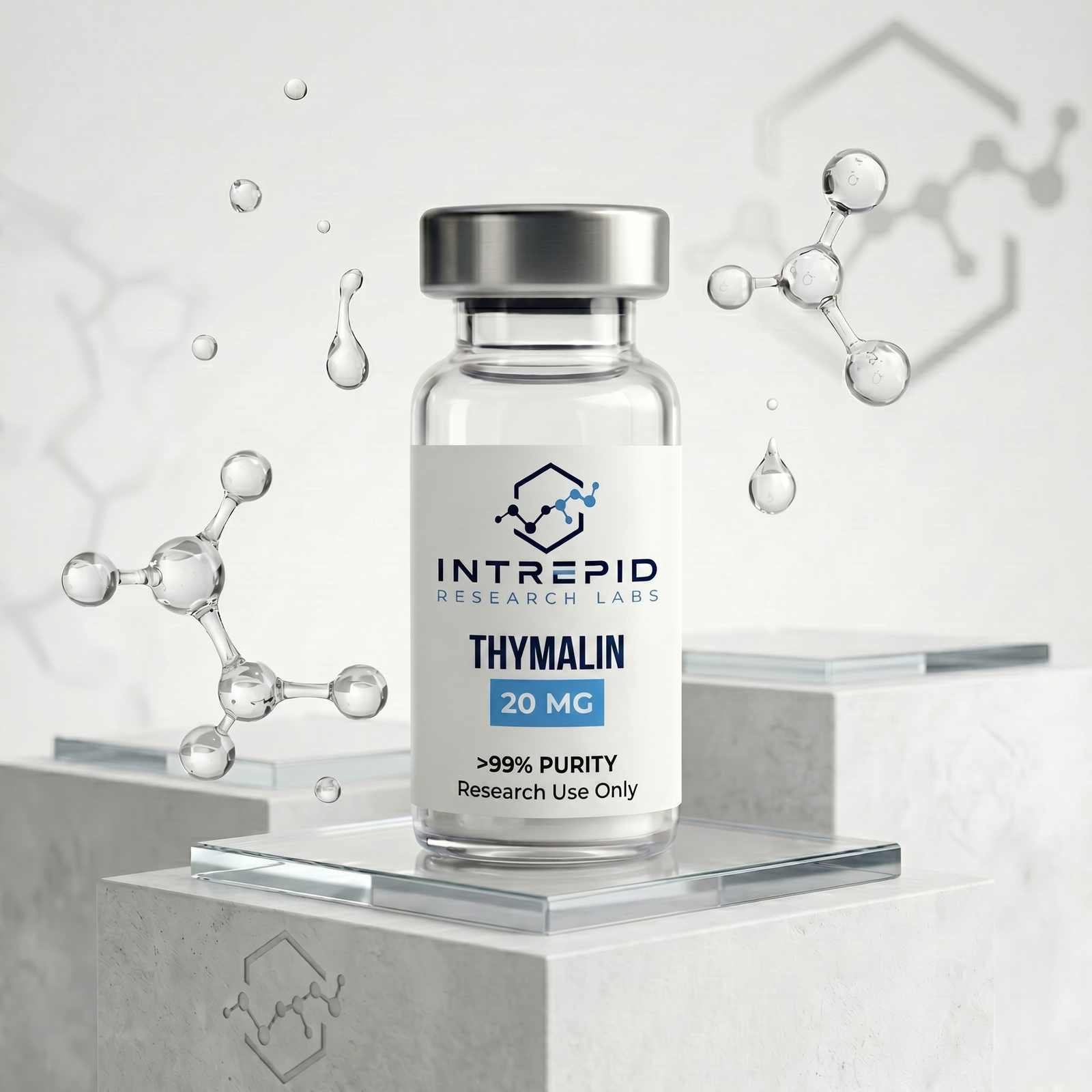
Thymalin Peptide
Overview
Thymalin is a synthetic peptide bioregulator derived from the naturally occurring thymic peptide Thymulin. It is widely investigated in immune system regulation, cellular aging, inflammation, and endocrine research. Researchers continue to study Thymalin for its potential influence on T-cell function, immune signaling, tissue regeneration, and healthy aging within controlled laboratory environments.
Product Specifications
- Product Name: Thymalin
- Other Known Titles: Nonathymulin, Thymic Factor, Serum Thymic Factor, Thymalin Alpha-1
- Molecular Formula: C33H54N12O15
- Molecular Weight: 858.86 g/mol
- Sequence: Pyr-Ala-Lys-Ser-Gln-Gly-Gly-Ser-Asn
- Form: Lyophilized Powder
- Application: Research Use Only
Research Overview
Thymalin has been extensively studied for its role in immune modulation, T-cell differentiation, inflammation, cellular longevity, and metabolic regulation. Experimental studies suggest it may influence immune cell activity, cytokine signaling, and cellular communication while supporting investigations into age-related biological processes and immune system function.
Current scientific understanding is based primarily on cell-culture studies, biochemical assays, and preclinical animal research.
Mechanism of Action (Research Only)
Experimental studies suggest that Thymalin may regulate T-cell differentiation, immune signaling, and cytokine activity, contributing to research involving inflammation, cellular repair, and immune homeostasis. Researchers have also investigated its effects on cellular aging, metabolic regulation, oxidative stress, and endocrine signaling pathways under controlled laboratory conditions.
Potential Research Applications
Current laboratory investigations include:
- Immune system regulation
- T-cell differentiation
- Cellular aging research
- Healthy longevity studies
- Inflammation research
- Cytokine signaling
- Metabolic regulation
- Cardiovascular research
- Kidney function research
- Circadian rhythm studies
- Cancer biology research
- Neuroimmune interactions
- Comparative peptide research
Storage
- Store lyophilized peptide in a cool, dry environment.
- After reconstitution, refrigerate at 2°C–8°C.
- Protect from heat, moisture, and direct light.
- Avoid repeated freeze-thaw cycles to preserve peptide stability.
Future Research
Thymalin continues to be investigated for its potential role in immune regulation, healthy aging, inflammation, metabolic function, and cellular homeostasis. Ongoing preclinical studies aim to further understand its biological mechanisms and broader applications in laboratory science.
| Size | 10mg, 20mg |
|---|
Certification Of Analysis (COA)
Coming Soon.
Related products
-
Peptides
ADIPOTIDE
$96.00 Select options This product has multiple variants. The options may be chosen on the product page -
Peptides
ACE 031
$179.00 Select options This product has multiple variants. The options may be chosen on the product page -
Peptides
CJC-1295 w/o DAC
Price range: $64.00 through $115.00 Select options This product has multiple variants. The options may be chosen on the product page -
Peptides
FST-344
$198.00 Select options This product has multiple variants. The options may be chosen on the product page -
Peptides
Hexarelin
Price range: $48.00 through $89.00 Select options This product has multiple variants. The options may be chosen on the product page

Reviews
There are no reviews yet.