
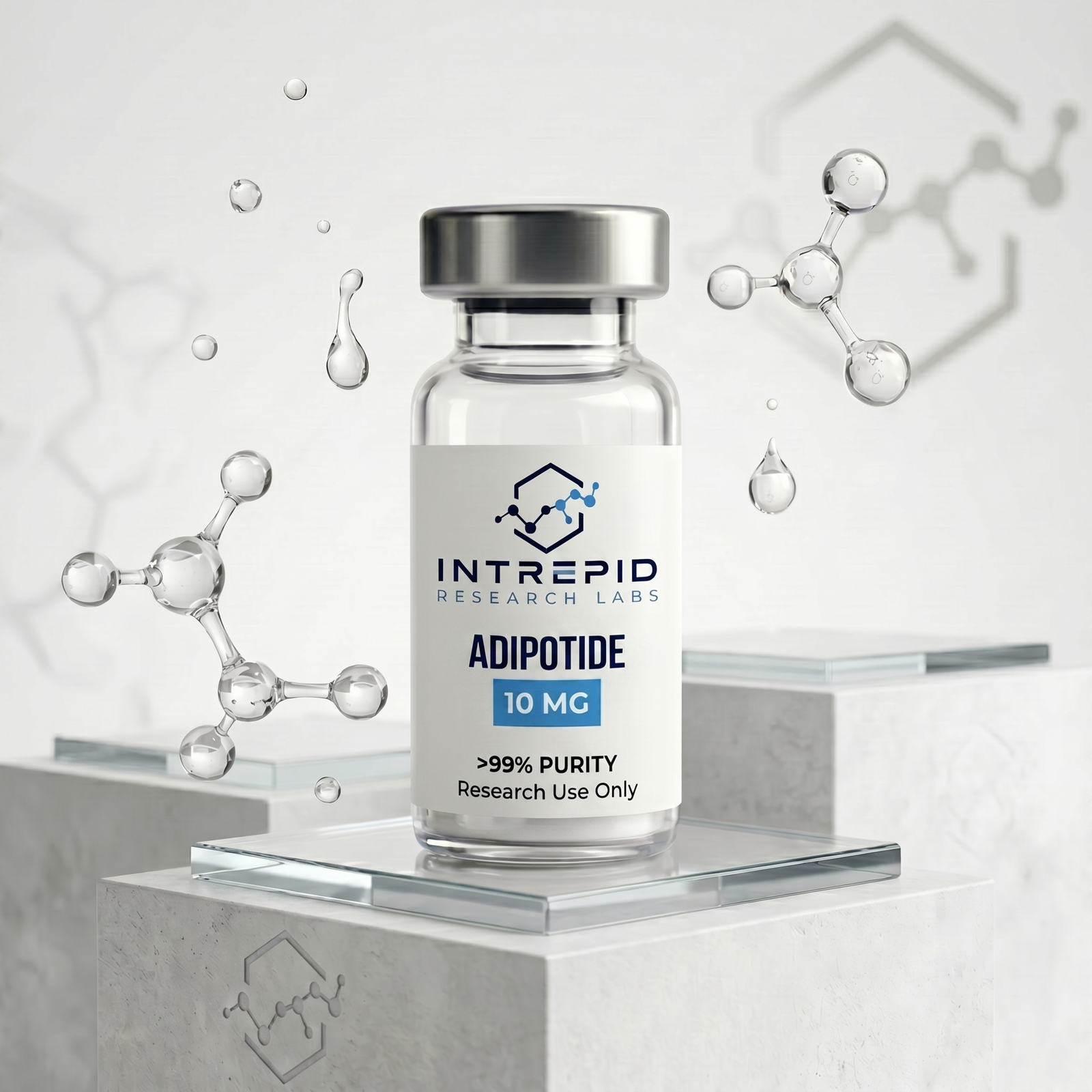
Adipotide FTPP Peptide
Overview
Adipotide FTPP is a category of proapoptotic peptides intended to eliminate fat cells. Research suggests that it may selectively cut off the blood supply to adipose tissue while leaving the blood vessels supplying the rest of the body unaffected. Studies conducted in monkeys have indicated its potential to promote weight loss, improve insulin resistance, and reduce symptoms associated with Type 2 diabetes.
Specifications
Other Known Titles: Adipotide
Molecular Formula: C152H252N44O42
Molecular Weight: 2611.41 g/mol
Sequence: Cys-Lys-Gly-Gly-Arg-Ala-Lys-Asp-Cys-Gly-Gly-(Lys-Leu-Ala-Lys-Leu-Ala-Lys)₂
Adipotide FTPP Research
Mechanism of Action
Adipotide has been suggested to exert its effects by binding to receptors for two specific proteins, ANXA2 (Annexin A2) and Prohibitin (PHB). These receptors may be expressed in a variety of cells, although immunohistochemical analysis suggests they form a unique ANXA2-Prohibitin receptor system found primarily in white adipose tissue.
Researchers identified these receptors on the endothelial cells of blood vessels that support white fat cells. Studies further indicate that this receptor complex may regulate fatty acid transport within white adipose tissue (WAT).
To investigate this relationship, scientists disrupted the interaction between ANXA2 and Prohibitin using genetic methods and blocking peptides. Their findings suggested that fatty acid transport efficiency may depend on this interaction. Research also proposes that ANXA2 and Prohibitin facilitate the movement of fatty acids from endothelial cells into adipocytes.
Further investigation revealed that ANXA2 and Prohibitin form a complex with the fatty acid transporter CD36, indicating a possible role in regulating fatty acid uptake within white adipose tissue.
Researchers also observed that extracellular fatty acids appear to promote the coexistence of Prohibitin and CD36 on the adipocyte surface. This led to the hypothesis that fatty acids themselves may trigger this interaction.
Experimental findings further suggest that inhibiting ANXA2 could reduce fatty acid uptake, potentially leading to hypertrophy of white adipose cells. Prohibitin, meanwhile, is recognized as a multifunctional membrane-associated protein involved in regulating cell growth and survival. It has been hypothesized that its movement from the cell membrane to the nucleus may initiate programmed cell death (apoptosis).
Scientists concluded that the biochemical interaction between ANXA2 and PHB may regulate CD36-mediated fatty acid transport in white adipose tissue, identifying a potential pathway for future metabolic disease research.
Adipotide FTPP Structure
Adipotide possesses a unique peptide structure consisting of the amino acid sequence GKGGRAKDC-GG-D(KLAKLAK)₂. The nine-amino-acid sequence CKGGRAKDC has been reported to exhibit a specific affinity for the ANXA2-Prohibitin receptor system located on the blood vessels that supply white adipose tissue.
Researchers utilized phage display technology to identify the CKGGRAKDC peptide motif, which was found to bind to Prohibitin, a membrane protein considered a vascular marker of adipose tissue. By directing a proapoptotic peptide toward Prohibitin in the adipose vasculature, researchers observed the selective ablation (removal) of white fat tissue. This process appeared to promote the resorption of established white adipose tissue and was associated with normalization of metabolic function in preclinical research models.
The (KLAKLAK)₂ segment is believed to disrupt mitochondrial membranes after receptor-mediated cellular internalization, potentially triggering programmed cell death (apoptosis). Because Adipotide targets Prohibitin within white adipose vasculature, it has been investigated for its ability to selectively induce apoptosis in fat cells.
Research has also suggested that Adipotide and related peptidomimetics may have the potential to reduce subcutaneous fat, visceral fat, and even ectopic fat deposits, such as fatty liver tissue. Scientists have proposed that vascular-targeted peptide therapies may contribute to future strategies for controlling adipose function and metabolic disorders.
Adipotide FTPP and Cancer Cells
Cancer tissues require an extensive blood vessel network to sustain rapid growth and metastasis. Since Prohibitin has been identified in several cancer types, researchers have explored whether targeting this receptor could provide a more selective approach for studying tumor vasculature while minimizing damage to surrounding healthy tissues.
Several studies have also investigated the relationship between obesity and aggressive prostate cancer (PCa). Researchers have identified three major biological pathways that may contribute to this relationship:
- Insulin / Insulin-like Growth Factor-1 (IGF-1) Axis
- Sex Hormone Regulation
- Adipokine Signaling
High insulin levels associated with obesity have been suggested to stimulate tumor cell growth in experimental prostate cancer models. Elevated circulating IGF-1 has likewise been linked with increased cancer incidence and disease progression in several studies.
Obesity may also alter hormone metabolism by increasing the conversion of testosterone into estradiol within adipose tissue. Although epidemiological findings remain inconsistent, preclinical investigations suggest this hormonal imbalance may influence prostate cancer progression.
Researchers have further examined the role of adipokines in obesity-related cancer biology. Leptin, which is often elevated in obesity, has demonstrated pro-tumor activity in laboratory models by promoting cell proliferation and migration while reducing apoptosis. Conversely, Adiponectin, typically reduced in obesity, appears to exhibit anti-tumor properties. Lower adiponectin concentrations have been associated with metastatic and aggressive forms of prostate cancer.
In addition, obesity has been linked with elevated Interleukin-6 (IL-6) levels, a pro-inflammatory cytokine produced largely by adipose tissue. Prostate cancer cells have been shown to express IL-6 receptors, suggesting another possible mechanism connecting obesity, chronic inflammation, and tumor progression.
Adipotide and Glucose Tolerance
Glucose tolerance is a commonly used parameter for evaluating metabolic health and is typically assessed through fasting blood glucose measurements or oral glucose tolerance testing. Metabolic conditions such as diabetes have traditionally been managed through dietary modifications and regular physical activity, although measurable improvements often require long-term commitment.
Preclinical research involving Adipotide has reported rapid, weight-independent improvements in glucose tolerance in animal models. These findings suggest that reducing white adipose tissue may positively influence glucose metabolism regardless of overall body weight.
Although it remains unclear whether Adipotide directly promotes fat reduction or indirectly affects metabolism by decreasing appetite, current research indicates that improvements in glucose tolerance and reductions in fat cell density have been observed even in the absence of significant weight loss. Additional research is required to further understand the underlying biological mechanisms involved.
Adipotide and Fat Loss
Research conducted in rhesus monkeys has investigated the potential of Adipotide to induce apoptosis specifically within the blood vessels supplying white adipose tissue. By targeting these blood vessels, researchers observed a reduction in blood supply to fat cells, leading to the programmed elimination of adipose tissue.
Preclinical findings reported:
- Rapid weight loss
- Reduced Body Mass Index (BMI)
- Improved insulin sensitivity
- Reduction in white adipose tissue
Researchers also noted that animals experiencing significant weight loss often displayed reduced appetite during the study period. However, it remains uncertain whether appetite reduction was a direct effect of Adipotide or a secondary consequence of changes in adipose tissue.
Current evidence suggests that Adipotide interacts with Prohibitin, a membrane protein receptor expressed in the blood vessels of white adipose tissue and certain cancer cells, making it an important focus for ongoing metabolic and vascular research.
Future Research
Anti-angiogenic molecules such as Adipotide continue to be investigated for their potential applications in metabolic disease and cancer research. Most studies conducted to date have focused on their ability to selectively target the blood vessels supplying white adipose tissue, thereby inducing apoptosis in fat cells.
Ongoing areas of investigation include:
- Obesity and body fat regulation
- Metabolic syndrome research
- Insulin resistance studies
- Glucose metabolism
- Type 2 diabetes research
- Vascular-targeted peptide therapeutics
- Cancer-associated angiogenesis
While preclinical studies have produced promising results, additional laboratory research is necessary to fully understand the safety, mechanisms of action, and broader scientific applications of Adipotide FTPP.
| Size | 10mg, 2mg, 5mg |
|---|
Certification Of Analysis (COA)
Coming Soon.
Related products
-
Peptides
CJC-1295 w/o DAC
Price range: $64.00 through $115.00 Select options This product has multiple variants. The options may be chosen on the product page -
Blends
CJC-1295+IPAMORELIN
Price range: $90.00 through $169.00 Select options This product has multiple variants. The options may be chosen on the product page -
Peptides
HGH Fragment 176-191
Price range: $65.00 through $285.00 Select options This product has multiple variants. The options may be chosen on the product page -
Peptides
HGH 191AA
Price range: $135.00 through $348.00 Select options This product has multiple variants. The options may be chosen on the product page -
Peptides
EPITHALON
Price range: $48.00 through $135.00 Select options This product has multiple variants. The options may be chosen on the product page

Reviews
There are no reviews yet.